

Right outside my window, they tell me, is a swamp. I cannot see it for myself, because the swamp is covered in snow. But I can imagine there is a swamp because the trees are a little undersized and many are in the long, slow process falling over. Each year, the trees slowly fall over. Too slow to be visible, but I assure you, they are still falling.
There is too, the conifer trees that are not evergreens. They look like evergreens but they are actually larch trees in the needle-like drag of the conifer. A deciduous tree. A liar.
Last night, I saw a deer. It stood outlined by the light of the street. I stopped and stared at it for some time. It did not look at me once. This morning, I went on a hike, and I found large chunks of fur on the path. At first, I thought it was grass as it was short and the colour of dry grass. The texture also suggested dry grass, but when I touched it, I realized it was fur.


I have been reading Birds and Bees, Sharp Eyes, and Other Papers (N.D.) by John Burroughs. Burroughs (1837 to 1921) was a naturalist and essayist much influenced by Emmerson and Whitman. Birds and Bees …is courtesy Project Gutenberg, and I am reading it on my iPod. It seems odd to read a book on nature on such an unnatural device but this is the modern world after all.
Burroughs has a lovely, sometimes purple way of describing nature. I think his tendency to the descriptive is both a strength and a weakness of his writing. His work is detailed, employs a lot of metaphor and simile, and sometimes ventures down the purple path, but it is also very fitting for this style of writing. Reading Burroughs is like taking a walk with him as he describes the natural world. You experience nature as he does. Walking through his orchards, his dog ambling along at your side, and the ever present shot gun in case one encounters a red squirrel which he seems to have roundly hated.
Anthropomorphism is the cornerstone of his writing, something a modern naturalist is trained to avoid, although I do not think that they ever achieve the impartial observations they claim. Burroughs is definitely not of the Skinnerian school of animal study. I like Burroughs way of endowing his subjects with human qualities, because it reveals much about the writer and even helps the animal to become alive on the page. A media theorist I recently read, refers to animals as technology, and I much prefer the naïve humanist quality appropriated by Burroughs to describe his world, than the careless theoretic use employed by modernist theorists. But Burroughs does not have the transcendental quality of Emmerson or Thureau, nor the inspirational quality of the art of Whitman, rather his work is transportational (perhaps escapist).
Burroughs writing reveals a very active, sometimes combative naturalist. He is often irritable, especially when defending a bird. He rightfully hates the human plunderers of nests and birds, and, sadly, he shoots the non-human plunderers. Sometimes I wish that he would have reversed his policy. Burroughs reports his repeated and failed attempts to intervene with nature. Shooing cow birds away from nests, only to discover them back the next day. Finding grounded fledglings and putting them back into the wrong nest, where the fledgling then terrorizes and kills the residents. Something all students of nature have encountered, and have repeatedly tried to beat the odds, always failing.
What is surprising is the number of species that Burroughs documents. He lists a number and variety of species that we could not hope to encounter eighty years after he has written about them. Burroughs orchard is chock-full of birds, although he reports very low survival rates, estimating only one in ten fledgling survives.
I consider these terrible odds of bird species from only eighty years ago and then reflect on the birds that are now killed en mass. Most recently, thousands of birds have fallen from the sky in North and South America. Consider too, that every year thousands of migratory birds are killed by the tailing ponds of the tar sands, high rises, wind turbines, poor farming practices and other industries.
When British naturalists came to Canada, they reported that the sky was covered by a thick canopy of birds. Now we can look up and see a sky, empty of its former inhabitants.


For Christmas I was given a book, Canning, Freezing, Storing Garden Produce (1977) published by the US Department of Agriculture. It is an excellent guide. I highly recommend it. It isn’t over cautious like many of the books of this kind, and it explains some of the reasons why you should heat process pickles (something I haven’t done but I will consider doing now).
Like all books of this kind, it talks a lot about botulism. Botulism occurs when non-acidic fruits and vegetables are not processed correctly. In this guide they say that one cup of botulism is enough to kill the entire world. It reminds me of a home economics class. The instructor said that one cup of licorice extract was enough to colour the great lakes.
Just one cup and the world ends and the lakes turn a waxy black shade.

When I look at my garden I see the skeletal remains of the bean house looming over me. All my dahlias are dead, they are blackened and leaning over some are lying prone on the ground.
I am pursued by regret. I should have picked their last flowers. Now, there are no more flowers left in the garden. What about my frozen kale, leeks and broccoli. Will they survive? Should I have covered them? Why did I fail them so?
My larder is empty. All the potatoes are gone. There is no more fresh fruit or vegetables to pick from the garden. I must now shop for my greens, and even in the stores, the only good choices are the cole crops and girl cannot live on cole alone. I know this because I have tried.
And the sky is grey.


 The snow geese came through in large flocks in the late fall. The would stay in the back fields, eating the corn leftover from the harvest. When I walked too near them they would all take flight. Then I would be surrounded by these large white birds, winging around me.
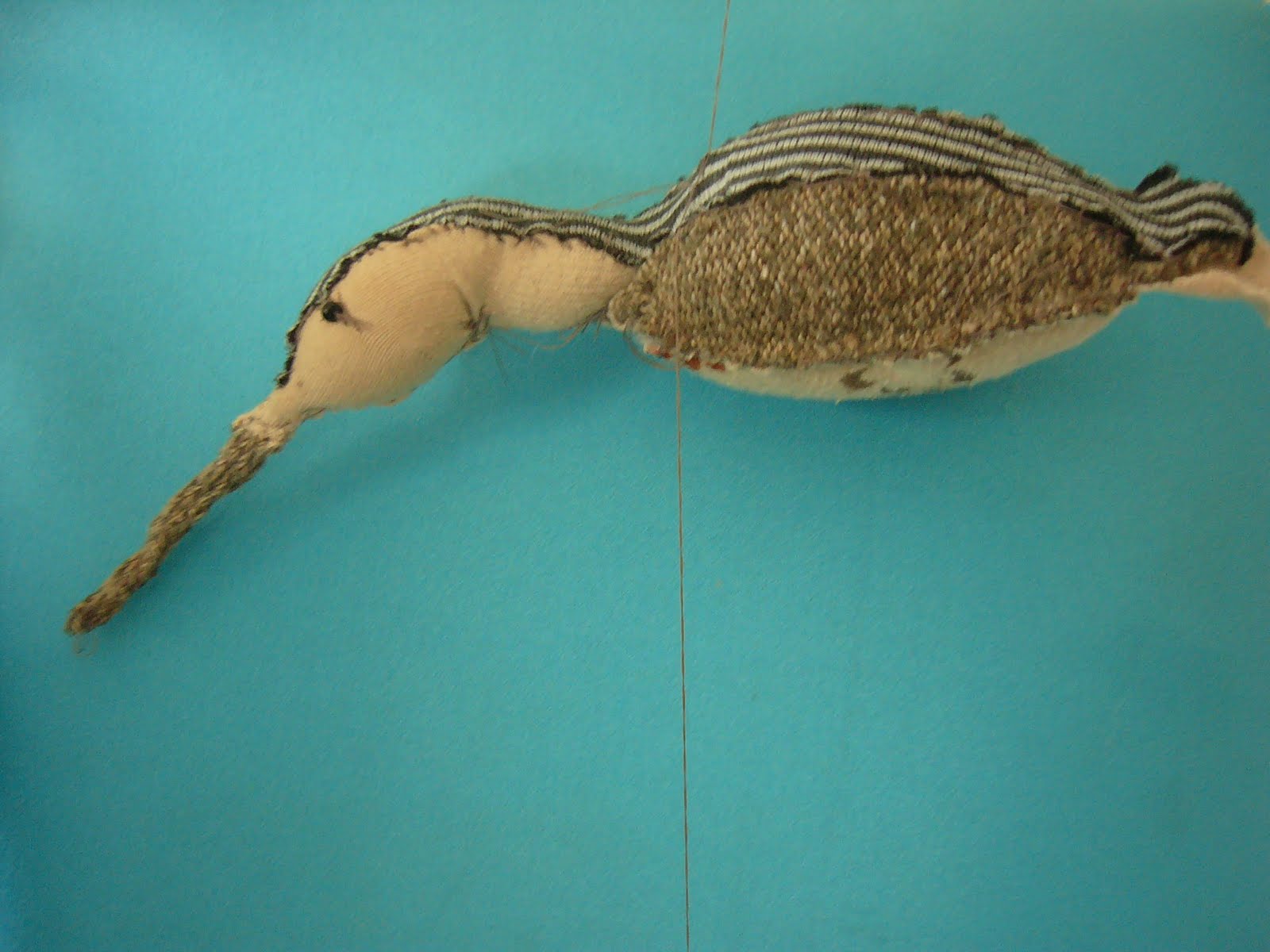 This fall we have encountered several snipes at the farm. They have a very distinctive call, hence their name. Even if you don't hear their call, you can identify a snipe by its weird zig-zag flight pattern.
 People still hunt snipe although they are very tricky to shoot. I try not to think about that too much.

 I was so impressed by the pelicans summering at Floating Stone lake in northern Alberta that I had to make them. They are amazing birds. Huge. Beautiful. I have never seen anything quite like them.


 Then we dismantled the greenhouse and harvested that last of the tomatoes. It is November after all, and we should have tomatoes ripening until the start of December. We take the greenhouse down, because we have lost a couple of greenhouses to the November winds. Scot built the greenhouse so that it comes apart fairly effortlessly. The most difficult part is getting the tomato plants out and making sure that there are no tomatoes left. Otherwise you can get all sort of pests and blight. Ideally we should move the greenhouse but it isn't that feasible.


 The world' largest fennel! I discovered the secret to sizing up fennel bulbs this year, and it is all in the transplating of the seedlings. You must start the plants and then transplant them, otherwise the tend to grow up, not out.
 The late corn is just about ready. Beside it, the remaining raspberries are all suffering from cane blight. I have been cutting out the blighted canes and it looks like they are all blighted. Worried about next year's crop.
 The fall garden is slowly finishing. The summer squash are almost done. Everything is now grown. Already, a plan is forming for next year.

 Once the tomatoes are prepped, you will need:
Finally, the peas are ready, the cherry tomatoes are just starting, the strawberries are almost finished, and the raspberries were a bust. The beans in the bean house are now climbing their poles. The garden is looking very good.
I am disappointed by the champion of England pea seeds. They are vigorous but the peas themselves are tiny and not very tasty. The Mr Vans are amazing tall and big pods with tasty peas. Waiting on the Manitoba peas but I think they may be small but they are also very vigorous..
The soya beans took, with a catch of about 70% which is better than in past years. The sunflowers never germinated, so have to buy some seeds next year. I liked the West Coast seed variety pack (usually I don’t go for that kind of thing but these were pretty good and they kept you guessing).
The zuccinni are producing now and soon we will be buried under an avalanche of them.
From Mother Jones (http://motherjones.com/blue-marble/2010/03/econundrum-12-most-contaminated-fruits-and-veggies)
In descending order, the EWG's 12 most contaminated fruits and vegetables:
1. Peaches
2. Apples
3. Sweet bell peppers
4. Celery
5. Nectarines
6. Strawberries
7. Cherries
8. Kale
9. Lettuce
10. Grapes (imported)
11. Carrots
12. Pears
For the full list of all 47 fruits and veggies, go here.


 The garden is slowly taking shape. Since we put the oven in the garden, we cannot bring the tractor in to till the soil. So we have been hand digging the garden, not that it is acres and acres but the soil has lots of clay and it can be a hard dig.
 We are over half-way finished digging the garden. Next week we will bring in the small rototiller and get the garden ready for planting another crop of peas. There are never enough fresh raw peas, especially since there are all sorts of tiny pea thieves running around the garden.
 I was walking along the edge of Chinatown a couple of weeks ago, and I was trying to figure out where the woodpeckers I could hear calling were located. I heard at least two of them, calling back and forth. Just when I had given up looking for them, there was this very loud hammering sound, and just across the street from me, I saw this woodpecker pecking away at a metal light standard. He was making a lot of noise, enough I suppose to attract a mate and a fan.


